Zirconia: From raw material to high-performance component
From mineral to precision material. How zirconia is made from zircon and why it is redefining medicine, watchmaking and other industries.


It all begins deep in the Earth's crust. Embedded in magmatic and sedimentary rocks lies zircon, an inconspicuous mineral that has existed in the Earth's crust since time immemorial. Long before it revolutionized modern industry, it was nothing more than a silent companion to geological processes. Today, its derivative, zirconia, is one of the most powerful high-performance ceramics in the world. But how does a mineral in sand become a precision component that is used in dental implants, hip joint balls, watch cases, chemical pumps, cutting tools, ball bearings, and turbine blades?
Origin: Between sand and rock
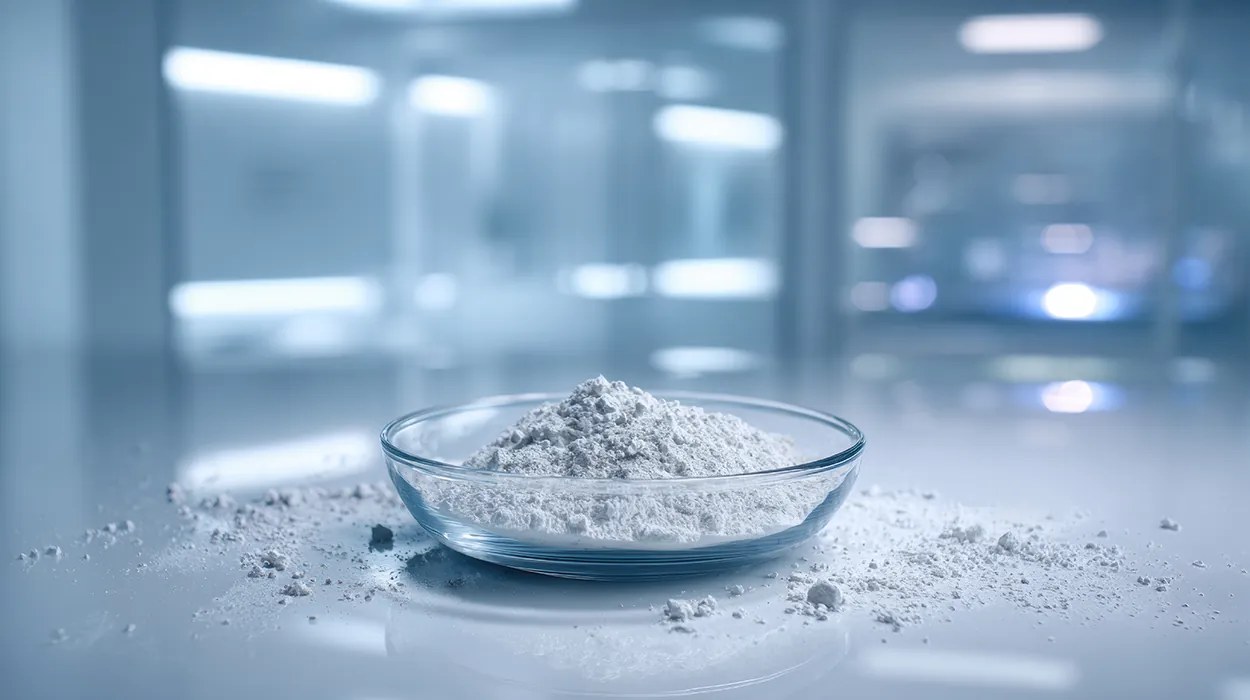
Zircon (ZrSiO₄) is found primarily in heavy mineral sands that have been deposited over millions of years by erosion and weathering on coasts and riverbeds. The largest deposits are found in Australia, South Africa, and Mozambique. On an industrial scale, zircon sand is extracted through surface mining and then separated from other minerals using gravity separation and magnetic separation. But zircon sand is only the beginning. To obtain pure zirconium oxide, also known as zirconium dioxide (ZrO₂), the raw material undergoes a complex chemical process. The zirconium is separated from the silicon by means of alkali or chlorination processes. The result is a high-purity white powder with exceptional properties.
The powder: the basis of high-performance ceramics
Pure zirconium oxide is too unstable for technical applications. When cooled, its crystal structure changes, which can cause stresses that make the material brittle. Only by adding small amounts of yttrium oxide, usually around three molar percent, is it possible to create a particularly high-performance material. This material is known as yttrium-stabilized zirconium oxide. In this composition, a special crystal form is retained at room temperature. Under mechanical stress, it can undergo local transformation. This results in a slight increase in volume, which generates compressive stresses and inhibits the propagation of cracks. This principle is called transformation strengthening.
The result is a very strong and at the same time fracture-resistant ceramic with a flexural strength of about 900 to over 1,000 megapascals, high hardness, and good biocompatibility. This is why zirconium oxide is used in medicine and dentistry, among other fields.
From powder to finished component
Processing begins with shaping. The stabilized powder is formed into blanks by isostatic pressing, dry pressing, or casting. This produces blocks, discs, or rods with different geometries. These so-called green bodies are still porous and relatively soft. This is a major advantage, as they can be machined precisely and gently in this state.
The blanks are given their desired shape in CNC milling machines. The subsequent shrinkage during sintering is taken into account from the outset. Machining can be carried out in the green state or after sintering in the fully hardened state.
The decisive step follows in the sintering furnace. At temperatures between 1,350°C and 1,500°C, the material compacts almost completely. The pores close and the structure becomes dense and homogeneous. During this process, the blank shrinks by about 20 to 25 percent.
After sintering, the component has its final mechanical, thermal, and chemical properties. It is characterized by high hardness, high fracture toughness, chemical resistance, and electrical insulation. Depending on the intended use, further processing steps may then be carried out, such as sandblasting, etching, fine grinding, or polishing.
One material, many worlds
The range of applications reflects the versatility of the material. In medical technology, zirconium oxide is a convincing biocompatible implant material in dentistry as well as in orthopedics. In the watch industry, it combines scratch resistance with a refined feel. In chemical engineering, zirconium oxide components withstand even the most aggressive media. And in electronics, it serves as a reliable insulator under extreme conditions.
What began as an inconspicuous mineral in the sand ends up as a high-precision component in a world that places ever-higher demands on its materials. Zirconium oxide shows that, with the right knowledge and technology, nature provides the material for true masterpieces.
Check out the latest